Tourism

Search site


Gdańsk


A panoramic view of the city
Fot. Office of the Marshal of the Pomorskie Voivodeship

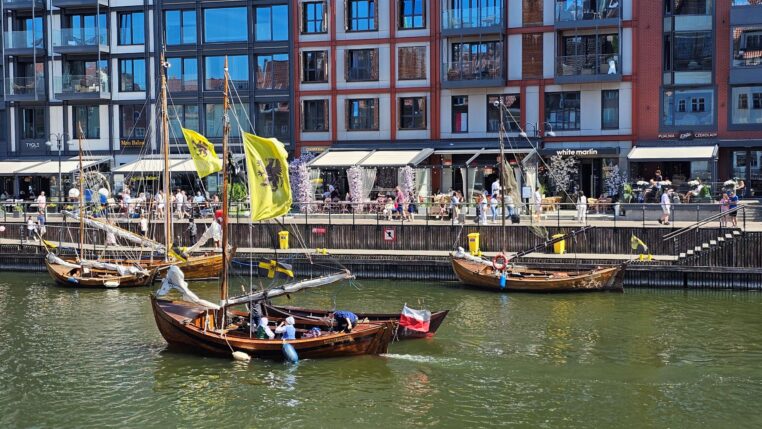
This beautiful city by the Baltic Sea, the city of Hevelius, Fahrenheit and Schopenhauer, is the capital of the Pomorze region. It is distinguished by its uncommon beauty and exceptional location. From the north the city is washed by the waves of the Baltic, while in the south it is bordered by rich post-glacial hills and the lakes of the Kashubian Switzerland. Furthermore, it is picturesquely surrounded by the lush greenery of numerous parks. This beauty was created over a thousand years of stormy history and by the creative minds and talents of outstanding citizens, natives of the city and migrants from the whole of Europe, attracted here by the city’s famous tolerance. In brick and stone they created the impressive architecture of the town halls, churches, townhouses and gates. There is a wealthy cultural heritage painstakingly preserved in the historic walls of numerous civic and religious buildings. It is pleasant to walk around Gdańsk at any time of the year, whether in sunlight or moonlight (when the beautifully illuminated monuments look as if they came from a fairy tale). Each street of the city has its own atmosphere: the wonderful Royal Route, Długie Pobrzeże (Long Riverside) along the River Motława and the enchanting, romantic nooks and crannies and the charming ulica Mariacka (St Mary’s Street).

The Royal Route

Fot. Przemysław Brozdowski


The wonderful Royal Route, leading from the Golden Gate along ulica Długa (Long Street) and Długi Targ (Long Market) to the Green Gate, charms everyone with the facades of its patrician townhouses and official buildings, of which the most impressive and valuable is the Main Town Hall - one of the buildings belonging to the History Museum of the City of Gdańsk. Its interiors are maintained in the style of Dutch Mannerism. The most splendid room is the Great Council Room (or Red Room), which is regarded as one of the richest modern town hall interiors. Its ceiling is decorated with 25 paintings by Isaac van den Block, all of symbolic significance, including ”The Apotheosis of Gdańsk”. From the Town Hall tower the sounds of a carillon can be heard every hour.

informacja

History Museum of the City of Gdańsk The Main Town Hall,
80-831 Gdańsk, ul. Długa 47,
tel. (+48) 058 767-91-00,
fax (+48) 058 767-91-02

kancelaria@mhmg.gda.pl

wystawa@fcs.org.pl
www.fcs.org.pl

www.mhmg.gda.pl


Arthur’s Court - the Great Stove


Fot. PROT

The Neptune Fountain

Fot. Aleksandra Kołtońska

Situated by the most beautiful of the city’s squares - Długi Targ - the 16th-century Arthur’s Court is one of the most impressive buildings of its kind in Northern Europe. Originally it was the meeting-place of wealthy patricians, merchants and craftsmen and it was an important centre of life in old Gdańsk. Within the court house, most importantly, is Europe’s largest Renaissance tiled stove, over 10 m in height. Nearby there is the elegant Golden Townhouse and the New Courthouse with the beautiful Gdańsk Vestibule where the lovely ”Lady in the Window” appears every day at 13.00 (during the tourist season also at 18.00). Close to these buildings there is the Neptune Fountain - the symbol of Gdańsk’s links with the sea.


informacja

The History Museum of the City of Gdańsk Arthur’s Court
80-831 Gdańsk, ul. Długi Targ 43/44
tel. (+48) 058 769-91-00,

wystawa@fcs.org.pl
www.fcs.org.pl

www.mhmg.gda.pl


Author: Marta Widzicka, published date: 2007.10.12 12:54